
Have you ever received a random invitation that ended up becoming exactly what you needed?
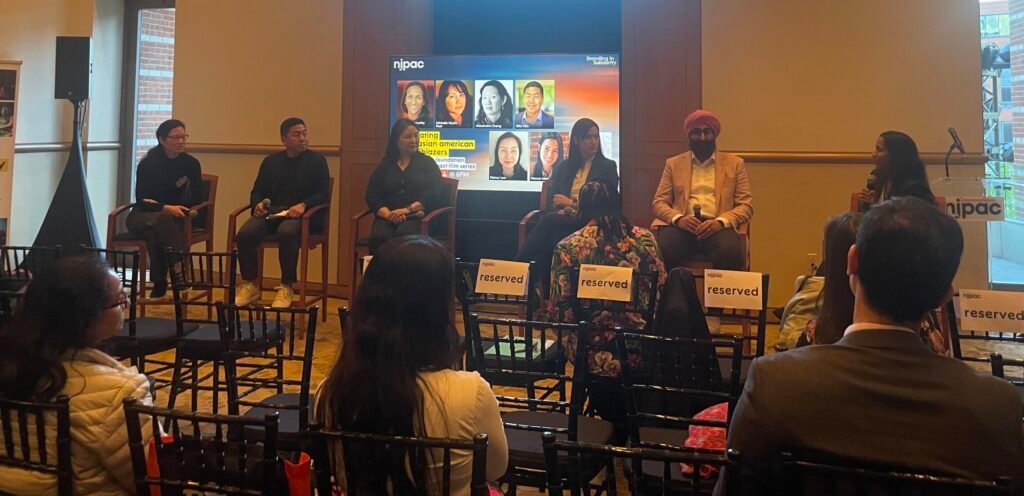
A few weeks ago, I checked my inbox and came across an invitation from New Jersey Performing Arts Center to attend a celebration honoring Asian American leaders, storytellers, and changemakers for Asian American and Pacific Islander Heritage Month.
As a storyteller and documentary filmmaker, the film screening portion immediately caught my attention. I invited an old friend from high school to join me, thinking it would simply be an opportunity to reconnect, celebrate culture, and enjoy a night out in Newark.
What I didn’t expect was to leave deeply inspired by the story of Patsy Mink.
An Unexpected Evening of Culture and Connection
When we arrived, we were pleasantly surprised to discover the event began with a private reception complete with appetizers, conversation, and community. There’s something beautiful about being in spaces centered around culture, storytelling, and shared experiences.
At times, though, my friend and I felt slightly out of place. We were the only non-Asian Americans in the room, and several people questioned whether we were in the correct space.
But honestly, moments like that reminded me why cultural events matter.
Celebrating culture should never be exclusive. Events like these create opportunities for communities to learn from one another, bridge divides, and better understand the lived experiences of others.
That lesson became even more evident during the documentary screening.
Who Was Patsy Mink?
Before attending the event, I had never heard of Patsy Mink. After learning about her life, I couldn’t stop thinking about her resilience, courage, and determination.
Patsy Mink was a Japanese American woman from Maui, Hawaii who became the first woman of color elected to the United States House of Representatives. At a time when women — especially women of color — were routinely denied access to leadership positions, academia, and political power, Patsy Mink refused to accept the limitations society placed on her.
She was what I call a BB Woman: a Barrier Breaking Woman.
Women like Patsy Mink challenge systems not only for themselves, but for future generations.
Her story is one of resilience in women leaders, perseverance through rejection, and using your voice to spark social change.
Fighting for Equality and Representation
Throughout her career, Patsy Mink advocated for civil rights, women’s rights, and educational equality. She spoke out against the Vietnam War despite criticism and political backlash. She also became a major force behind Title IX legislation, helping expand opportunities for women and girls in education and sports.
Watching the documentary, I kept thinking about how many doors were closed in her face before she ever stepped into Congress.
She faced discrimination because she was both Asian American and a woman. She was denied opportunities, excluded from spaces, and underestimated repeatedly.
Still, she persisted.
That phrase gets used often today, but Patsy Mink truly embodied it.
Instead of allowing rejection to silence her, she used it as fuel to create change.
The Vulnerability Behind Strong Women
One of the most powerful parts of the documentary was seeing Patsy Mink’s vulnerability.
Often, barrier breaking women are viewed only through the lens of strength. Society celebrates the accomplishments but overlooks the emotional cost of constantly having to prove yourself, fight for opportunities, and survive rejection.
The documentary showed those quieter moments:
the doubt,
the exhaustion,
the discouragement,
the questioning of self-worth.
As Black and Brown women, many of us know those feelings intimately.
We know what it feels like to walk into rooms where we are questioned before we are welcomed. We know the emotional weight of imposter syndrome, exclusion, and feeling unseen in professional or creative spaces.
Yet stories like Patsy Mink’s remind us that vulnerability and strength can exist together.
Her resilience wasn’t the absence of pain. It was her decision to continue despite it.
Storytelling Bridges Communities
After the screening, there was a panel discussion featuring Asian American leaders and advocates discussing policy, food insecurity, equality, and representation.
What stood out most was how universal many of their experiences felt.
My friend even reflected on how deeply she related to the panelists’ stories about identity, trauma, and navigating a country that often sees race before humanity.
That conversation reinforced something I strongly believe:
storytelling builds bridges.
Stories help us recognize ourselves in people we may initially see as different from us. They create empathy, connection, and healing across cultures and communities.
This is why storytelling and mental health are so deeply connected. When people feel heard, seen, and understood, healing becomes possible.
What You Endure Shapes Who You Become
One quote from the documentary stayed with me all evening:
“What you endure makes you who you are.”
That message feels especially important for women, creatives, changemakers, and young people struggling to find their voice.
Sometimes the very thing causing pain, frustration, or anger becomes the spark that pushes us toward purpose.
Patsy Mink turned exclusion into advocacy.
Rejection into action.
Pain into progress.
And because she did, generations of women after her were able to walk through doors she helped open.
I left that evening grateful — grateful for the invitation, grateful for the experience, and grateful for the legacy Patsy Mink left behind.
Her story serves as a reminder that breaking barriers rarely happens comfortably. But when people choose courage over silence, entire communities benefit from their resilience.